Poker Hand Strength: A Guide to Combinations and Probabilities

Poker Hand Strength: A Guide to Combinations and Probabilities
Poker is a game where luck and strategy meet in a fascinating balance. Whether you play Texas Hold’em, Omaha, or Seven Card Stud, understanding hand strength is essential for making smart decisions. Knowing the different combinations—and the odds of getting them—can be the difference between a calculated call and an expensive mistake. Here’s a guide to poker hand rankings and the probabilities behind them.
Hand Rankings – From Weakest to Strongest
In poker, the goal is to make the best possible five-card hand. Here’s the ranking from lowest to highest:
- High Card – No combination, just your highest card. If two players share the same top card, the next highest (the “kicker”) decides the winner.
- One Pair – Two cards of the same rank, such as two Kings.
- Two Pair – Two different pairs, like two Queens and two Tens.
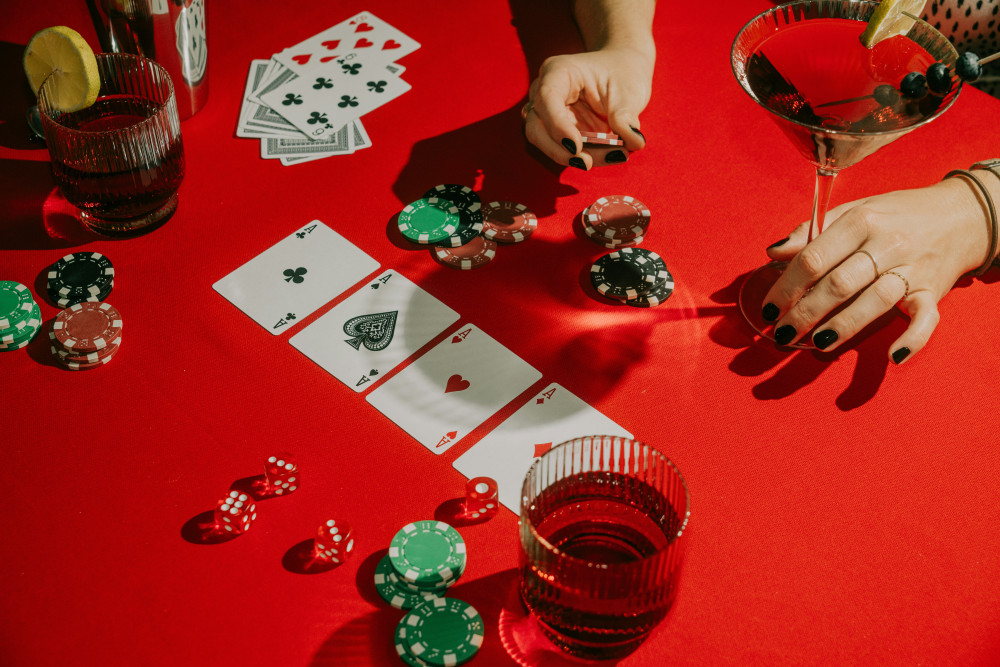
- Three of a Kind – Three cards of the same rank, such as three Aces.
- Straight – Five cards in sequence, like 5-6-7-8-9, in any suit.
- Flush – Five cards of the same suit, not in sequence.
- Full House – A combination of three of a kind and a pair, such as three Kings and two Jacks.
- Four of a Kind – Four cards of the same rank, like four Queens.
- Straight Flush – Five cards in sequence and of the same suit, such as 5-6-7-8-9 of hearts.
- Royal Flush – The strongest possible hand: 10, Jack, Queen, King, and Ace of the same suit.
Memorizing this order is the foundation for evaluating whether your hand is worth betting—or if it’s time to fold.
Probabilities – How Rare Are the Best Hands?
Poker involves millions of possible combinations. In Texas Hold’em, there are over 2.5 million distinct five-card hands. Here’s how often the most common hands appear:
- Royal Flush: about 1 in 650,000 hands
- Straight Flush: about 1 in 72,000 hands
- Four of a Kind: about 1 in 4,000 hands
- Full House: about 1 in 700 hands
- Flush: about 1 in 500 hands
- Straight: about 1 in 250 hands
- Three of a Kind: about 1 in 46 hands
- Two Pair: about 1 in 21 hands
- One Pair: about 1 in 2.4 hands
- High Card: about 1 in 1.9 hands
These numbers show why it rarely pays to chase the rarest hands—and why a simple pair can often be enough to win a pot.
Strategic Understanding – More Than Just Luck
While probabilities are fixed, poker is not purely a game of math. It’s also about reading opponents, assessing situations, and using probabilities as a tool for better decision-making.
- Position matters: Acting later in a betting round gives you more information about your opponents’ actions—and a strategic edge.
- Assess your risk: Consider how many cards can improve your hand (your “outs”) and compare that to the size of the pot and the bet you must call.
- Play the player, not just the cards: A frequent bluffer can make your average hand profitable if you read them correctly.
Mastering poker requires both mathematical insight and psychological awareness.
Learn to Think in Probabilities
One of the best skills any poker player can develop is the ability to think in probabilities rather than emotions. Instead of hoping for a miracle, ask yourself: What are the odds of improving my hand—and is it worth staying in the pot?
By combining this mindset with knowledge of hand rankings and opponent behavior, you can steadily improve your game and reduce losses over time.
Læs også:

From Theory to Practice
Understanding hand strength and probabilities is only the beginning. Real learning happens at the table—when you feel the pressure, read your opponents, and learn from your mistakes. Start with small stakes, play with discipline, and use experience to refine your strategy.
In the end, poker is a game of decisions. The better you understand the odds, the more control you have over the outcome—and the more enjoyable the game becomes.
Læs også: